

Highland Cow: Traits, Temperament, and Care

Highland cows are a distinctive cattle breed known for their long coats, sweeping horns, and calm demeanor. Originally developed to survive harsh environments, they are valued today for their hardiness, efficiency, and adaptability across a wide range of climates and farm setups.
Whether you’re curious because you’ve seen them online, are considering ownership, or want to understand how they differ from other cattle breeds, this page provides a clear overview of what Highland cows are, how they behave, and what it takes to care for them—without overcomplicating things.
What Is a Highland Cow?

A Highland cow is a heritage cattle breed that originated in the rugged regions of Scotland. The breed is known for its thick, double-layered coat, long horns, and ability to thrive in conditions where other cattle struggle. Highland cows are slow-growing, efficient grazers and are often kept for both conservation grazing and small-scale farming.
They are one of the oldest registered cattle breeds in the world and are recognized for their resilience, longevity, and generally calm temperament. For a more detailed breakdown of the breed’s definition, background, and characteristics, see our post on What Is a Highland Cow?
In the United States, breed standards and registration are overseen by the American Highland Cattle Association, which maintains records and promotes responsible breeding practices.
Where Highland Cows Come From
Highland cows originate from the Scottish Highlands, an area known for cold temperatures, high winds, and limited grazing resources. These environmental pressures shaped the breed over centuries, favoring animals that could survive on rough forage and withstand severe weather without intensive care.
Their long hair, strong hooves, and efficient metabolism are direct results of this environment. Understanding the breed’s origins helps explain why Highland cows perform so well in colder climates and why they are often used today for low-input farming and land management. You can explore this background in more depth in our article on the History of Highland Cows.
What Highland Cows Look Like
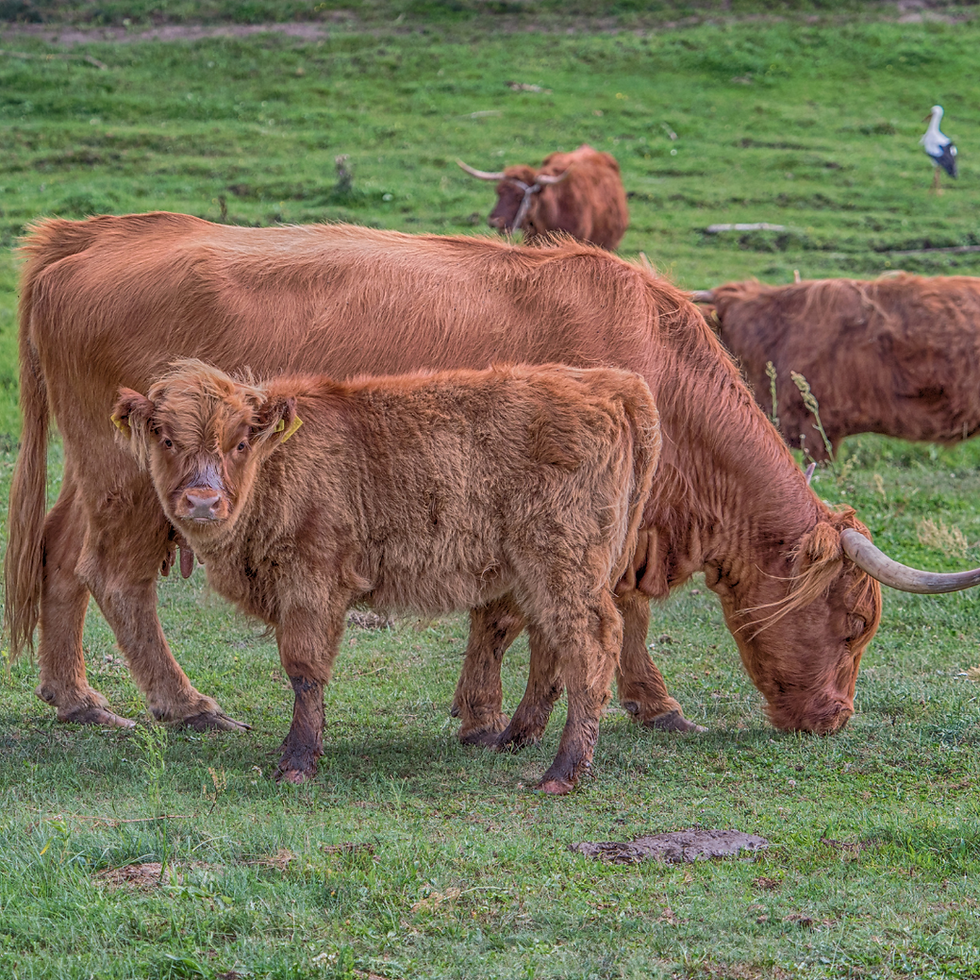
Highland cows are instantly recognizable due to their long, shaggy coats and wide, outward-curving horns. Their coat consists of a coarse outer layer and a soft undercoat, which provides insulation against cold and wet conditions. This hair often falls over their eyes, contributing to the breed’s iconic appearance.
They come in a range of colors, including red, black, yellow, dun, and brindle. Both cows and bulls grow horns, though their shape, length, and thickness can vary depending on genetics and sex. A closer look at these physical traits is covered in our post on What Does a Highland Cow Look Like?
Size, Weight, and Growth

Highland cows are considered a medium-sized cattle breed, though their long hair often makes them appear larger than they actually are. Compared to many commercial beef breeds, Highland cows grow more slowly and mature later, which contributes to their longevity and overall hardiness.
Adult size can vary depending on genetics, nutrition, and environment. Cows are typically smaller than bulls, with a more compact build, while bulls develop heavier frames and thicker horn structures over time. If you’re looking for specific measurements and comparisons, our article on How Big Do Highland Cows Get? breaks down average height and body size.
Weight is another area where Highlands differ from faster-growing cattle breeds. Their efficient metabolism allows them to maintain healthy body condition on forage-based diets without excessive weight gain. For a closer look at typical weight ranges and the factors that influence them, see What Does a Highland Cow Weigh?
In terms of growth, Highland cows take longer to fully mature than many other breeds. While they may reach physical size earlier, they continue to fill out and develop muscle well into adulthood. Understanding when a Highland cow is truly mature is especially important for breeding and handling decisions, which is covered in When Is a Highland Cow Full Grown?
Temperament and Behavior

Highland cows are widely known for their calm and steady temperament, especially when compared to more high-strung cattle breeds. When handled consistently and given adequate space, they tend to be docile, curious, and easy to manage. This temperament is one of the main reasons they are popular with small farms, conservation grazing projects, and educational settings.
Like all cattle, individual behavior can vary based on handling, environment, and herd dynamics. Highland cows are social animals and do best in groups, where clear hierarchy reduces stress and aggression. A more detailed look at daily behavior, social structure, and handling considerations can be found in our article on Gentle Giants: Understanding Highland Cow Behavior.
Bulls require additional respect and caution, particularly during breeding season. While Highland bulls are not inherently aggressive, their size, strength, and protective instincts mean they should never be treated casually. Understanding the difference between normal bull behavior and warning signs is critical for safety, which is why we break this down further in Are Highland Cow Bulls Aggressive?
Care, Feeding, and Handling
Highland cows are known for being low-maintenance compared to many commercial cattle breeds, but they still require consistent care and appropriate management. Their thick coats allow them to tolerate cold weather exceptionally well, which often reduces the need for shelter in colder climates. In warmer areas, access to shade, airflow, and clean water becomes more important to prevent heat stress.
Feeding requirements for Highland cows are generally straightforward. They are efficient grazers and do well on quality pasture, hay, and forage-based diets. Overfeeding grain is rarely necessary and can lead to health issues. Seasonal changes can affect nutritional needs, particularly in winter or during breeding and lactation periods. For a more detailed look at year-round management, see our overview of Seasonal Guide to Highland Cow Care.
Handling Highland cows safely comes down to understanding their behavior, respecting their space, and accounting for their horns. While their temperament is usually calm, improper handling or unfamiliar situations can create unnecessary risk. Basic safety practices, facility design, and handler awareness make a significant difference. We cover these considerations in more detail in Mastering the Safe Handling of Highland Cattle.
Cost and Ownership
The cost of owning a Highland cow varies widely depending on age, genetics, registration status, and intended use. Calves are generally less expensive than breeding-age animals, while registered or well-bred cattle can command higher prices. Beyond the initial purchase, long-term costs include feed, fencing, veterinary care, and routine maintenance.
Highland cows appeal to a wide range of owners, from hobby farms to conservation projects, but they are not a casual purchase. Land availability, zoning regulations, and local livestock laws should all be considered before committing. A realistic breakdown of pricing and ongoing expenses is covered in Understanding the Cost of a Highland Cow.
Some people are drawn to the breed for personal enjoyment, land management, or small-scale farming. Others are interested in breeding or long-term investment. If you’re weighing whether ownership makes sense for your situation, our posts on Why Buy a Highland Cow? and Can a Highland Cow Be a Pet? explore those considerations in more detail.
Finding a reputable source is just as important as deciding to buy. Knowing where to look—and how to avoid bad actors—can save time, money, and frustration. We outline those steps in Finding the Best Places to Get a Highland Cow and Smart Tips to Avoid Scams in the Highland Cow Community.
Common Myths About Highland Cows
Highland cows are often surrounded by misconceptions, largely due to their distinctive appearance and popularity online. While their long hair and calm demeanor make them look approachable, many assumptions about the breed don’t hold up when examined closely.
One common myth is the idea of the “mini” Highland cow. While smaller-framed animals do exist due to genetics or crossbreeding, there is no officially recognized miniature Highland breed. Claims of true mini Highlands are often misleading, which is why we break down what’s real and what isn’t in Unraveling the Myth of Mini Highland Cow.
Another misconception is whether Highland cows can be ridden. Despite their size and strength, they are not built for riding, and attempting to do so raises both safety and animal welfare concerns. This topic comes up frequently, so we address it directly in The Truth About Whether You Can Ride a Highland Cow.
There is also a lingering belief that Highland cows are aggressive or dangerous by nature. In reality, they tend to be calm when managed properly, though any large animal should be treated with respect. Understanding their behavior, rather than relying on assumptions, is key to safe interaction.
Highland Cow vs Other Cattle
Highland cows differ from many common cattle breeds in both management style and purpose. Compared to fast-growing commercial breeds, Highlands mature more slowly, require less intensive feeding, and perform well in marginal grazing conditions. Their efficiency makes them well-suited for low-input farming and land conservation.
Physically, Highland cows are generally smaller and lighter than many beef breeds, but their dense coats and strong frames give them a sturdy presence. Their ability to thrive in colder climates sets them apart from breeds that require more shelter or supplemental feed.
For a side-by-side look at how Highland cows compare to more traditional cattle breeds, including differences in appearance, behavior, and upkeep, see Highland Cow vs Regular Cow: A Comprehensive Comparison.
Seeing Highland Cows in Person

For many people, interest in Highland cows begins with seeing them up close. Their appearance, temperament, and interaction with their environment are best understood in person rather than through photos alone. Visiting a farm or participating in an educational experience can provide a clearer picture of what these animals are really like.
At Hilltop Highlands, visitors can observe Highland cows in a natural setting and learn more about their care and behavior. Details about available visit options and how to book are available directly through the scheduling page, while additional context about the experience can be found in Where to Pet a Highland Cow? and Uncover the Best Highland Cow Experience at Hilltop Highlands Cattle Farm.
Highland Cow FAQs
Are Highland cows friendly?
Highland cows are generally calm and even-tempered when handled properly. Regular interaction and consistent management play a large role in how comfortable they are around people.
Are Highland cows aggressive?
They are not naturally aggressive, but like all cattle, they can become defensive if stressed or threatened. Bulls, in particular, require careful handling and respect.
Can Highland cows live in hot climates?
They can live in warmer regions with proper shade, airflow, and water access, though they are best suited to cooler environments.
How long do Highland cows live?
Highland cows are known for their longevity and can live significantly longer than many commercial cattle breeds when cared for properly.
Are Highland cows good pets?
While they can be personable, Highland cows are livestock and require space, proper facilities, and knowledgeable care. They are not pets in the traditional sense.